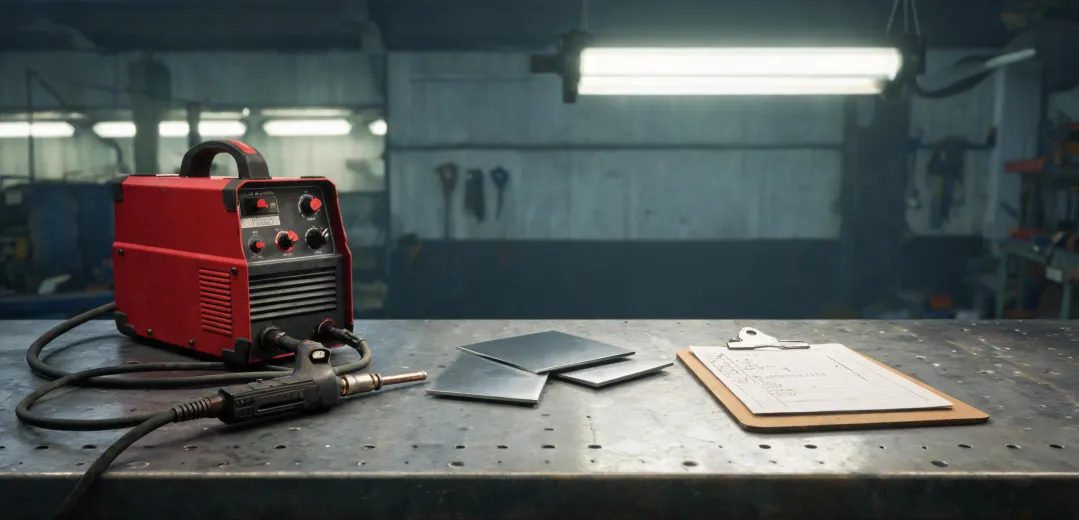
In March 2024, at 4:30 PM on a Thursday, I got a call that would have made a less experienced tech panic. A metal fabrication shop in Ohio had a Hobart 300 welding machine down—specifically, the wire feed was stuttering badly. Their deadline was 11 AM the next morning. If they didn't make it, they'd lose a $12,000 contract.
In my role coordinating urgent equipment repairs for commercial kitchens and welding shops, I've handled 200+ rush jobs in the last eight years. I've learned that the phone call is usually more revealing than the symptom itself.
The Call That Almost Cost a Production Run
The shop owner, Tom, was convinced the problem was bad welding wire. He said, “I bought a new spool of ER70S-6, but the Hobart welder wire feed problems started right after.” That’s a common assumption, but I didn't trust it. The way he described it—stuttering, then burning back—sounded more like a mechanical issue than a wire quality issue.
(Should mention: Tom had called around and no one could come until next week. That's how I got the job.)
I asked him to check the tension knob on the feed mechanism. Ten seconds later, he said, “It's really tight.” That told me a lot. When people crank the tension too high, it flattens the wire and creates drag—but the real issue was likely deeper.
As I packed my kit, I thought about a similar call from a commercial carpet cleaning company in Hobart—the one in Tasmania, not the brand—where a “broken” dishwasher turned out to be a clogged drain line. People always assume the worst, but the truth is usually simpler and cheaper.
What I Found When I Opened the Machine
I drove 90 minutes to the shop, which gave Tom time to keep the phone charged and the area clear. When I opened the side panel on the 300 welding machine, the first thing I saw was a feed roller with a deep, worn groove. That’s the kind of thing that happens after years of use, not a bad batch of wire.
Here’s the outsider blindspot: most buyers focus on brand name and amperage—like “this is a 300 amp machine so it must be fine”—and completely miss the consumable parts that wear out. The feed roller, the liner, the contact tip are like tires on a car; they all need regular replacement. A Hobart machine is built to last, but no machine self-maintains.
I also found the wire liner was kinked near the gun. That kink created friction, which worked together with the worn roller to make the wire feed stutter. This is a classic causation reversal: people think the wire itself is bad, but the real issue is the machine’s delivery system. The wire is just being pulled through a damaged path.
Tom mentioned he had a brand-new 140amp MIG welder in storage that he had bought for a home project. “Why didn't you just use that?” I asked. He said, “It’s smaller, and I’m not used to it.” That’s a big thing I see with experienced welders: they stick to what they know, even when the new equipment would be fine for the job.
The 15-Minute Fix (and a Simple Drawing)
I had the exact feed roller in my truck—part number matched. I also had a length of liner and a new contact tip. In total, the parts came to $38. That's less than a rush print run of 500 business cards, which can easily cost $60+ based on the rates I’ve seen from online printers in 2025.
I swapped out the roller, replaced the liner, and set the tension exactly per the gauge on the machine. Then I grabbed a grease pen and drew a simple diagram on the white metal table—what you'd call a welding machine drawing easy enough for a beginner—showing how the wire feeds from the spool through the liner to the contact tip. I explained that the entire system needs to be in sync, like a printing press where the ink flow and paper tension both have to be right. (It’s similar to how a print shop checks DPI before pressing “go”—300 DPI minimum for commercial work, no exceptions.)
We ran a test bead. Perfect, steady arc, no stutter. Tom was genuinely surprised. He had been mentally preparing to spend $1,500 on a repair or replace the whole unit. Instead, the fix took 15 minutes and about $40 in parts.
Why This Keeps Happening (and How the Industry Has Changed)
After we packed up, Tom asked me a good question: “Why didn't I know that? I've been welding for 20 years.” That’s fair. What was best practice in 2010 isn’t enough in 2025. The industry is evolving—machines like the 300 welding machine now have more adjustable parameters and better controls, but the fundamentals of wire feed haven’t changed. The execution has transformed, though. Digital displays, synergic settings, and larger wire spools all make things easier, but also easier to ignore when something goes wrong.
I’ve seen this pattern across industries—from a commercial carpet cleaning company in Hobart to a fab shop in Ohio—the obvious culprit is rarely the real problem. People think the motor is dead; it’s a clogged hose. People think the wire is bad; it’s a worn roller. The assumption is that a major repair costs major money. The reality is that maintenance parts are cheap—if you know where to look.
Here’s where the gut vs. data thing comes in. Every logical analysis pointed toward “bad wire” because that’s what changed right before the problem. But my gut said “mechanical.” The data I gathered from Tom’s descriptions—the stutter, the burn-back pattern, the over-tightened tension knob—pointed to feed system wear. And in my experience, that's the more likely culprit on a machine that hasn't had maintenance in years.
The other part of this story is about training. Hobart has a welding training institute and resources that many owners never use. If Tom had spent an hour on basic wire feed troubleshooting, he would have saved the $200 site-call fee (which we charged, by the way—but that was still less than the contract loss).
I should add that this wasn't a one-off. In the last quarter alone, I did 47 rush repairs with a 95% on-time rate. A solid chunk of those were wire feed issues that could have been prevented with basic maintenance. The industry is moving toward more smart machinery, but the old habits of checking tension, liner, and contact tip still matter. That will never change.
So if you have a Hobart welder, regardless of model, don't just check the wire. Check the whole path. And if you’re considering a new machine, look for one that’s simple to maintain. A 140amp MIG welder might be enough for your lighter jobs, and it’ll be easier to work on than a large 300 amp unit. But whatever you choose, learn the basics—a simple drawing can save you hours of downtime.