Last November, I almost skipped a phone call. We were short-staffed, I had a stack of returned-unit inspection forms on my desk, and the caller ID said it was a sales question. My role here is quality and brand compliance, not sales. But I picked it up anyway. That call ended up being a good reminder of why the question what's the best welding machine? is usually the wrong place to start.
Before I go further, a little context. I'm the person who reviews every unit we send out under the Hobart name, and every one that comes back. That's roughly 1,100 items a year across Hobart equipment sales for both commercial kitchen equipment and welding products. In 2024, I rejected 5% of first deliveries for things like missing accessories, transit damage, or spec mismatches. I'm not a welding engineer. I'm the person who has to explain why a machine that looks great on paper is wrong for the shop floor.
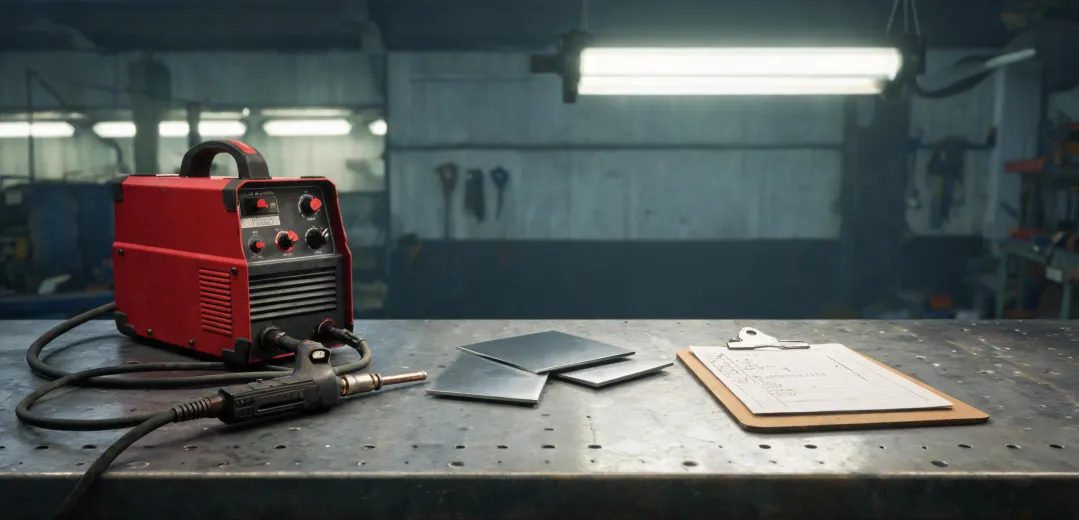
The caller was Dana. She runs a small metal fabrication shop that builds food trailer bodies. She had been researching welders for two weeks, and she opened with the exact phrase I hear more than any other: what's the best welding machine? Then she added that she'd already narrowed it down. She was pretty sure she wanted a Hobart 500559 Handler 140 MIG welder 115V.
My first instinct was to say yes and ask for the purchase order. The Handler 140 is a good seller, and Hobart's welding line is built for people who want reliability without a big learning curve. But I've learned the hard way that a popular configuration is not the same as the right configuration.
An hour before Dana's call, I processed a return on a welder that a customer bought online to save $350. The trigger switch died on the second job, and the missing regulator cost another $140. When he finally called our Hobart equipment sales desk, he paid more in total than if he'd bought the Hobart unit from the start. That kind of math sticks with me.
The Best Question Hides Real Variables
Dana listed three things she needed to weld: stainless steel door frames for food trailers, mild steel brackets, and occasional repairs on aluminum trailer skins. She also said she'd read something about machine learning welding, and she wondered if a welder could auto-tune itself to those jobs.
I get the machine learning welding question a lot. It sounds like a magic feature. There are industrial synergic MIG systems that use software algorithms to help set parameters, and I've seen those in bigger plants. But Dana was looking at a 115V compact MIG welder. That machine has a different job. It doesn't need to guess her technique; it needs enough power, enough duty cycle, and a gun that fits her hands.
The 115V Turning Point
The turning point came when I asked about her power supply. Did she have 230V in the shop? No. The shop was a rented space with 115V outlets and no easy way to add a 230V circuit before a deadline. That one answer made the decision simpler.
If she had 230V, I would have pushed her toward a larger machine. But she didn't. The Hobart 500559 Handler 140 MIG welder 115V is built for exactly this situation. It runs on standard household current, and its 140-amp output covers the 16-gauge stainless and 14-gauge mild steel she described. According to Hobart's product information (hobartwelders.com, accessed January 2025), the Handler 140 is positioned for light fabrication and repair work. That matched her workload better than a bigger machine would have.
When I told Dana that, she said she had almost bought a cheaper machine from an online marketplace. It cost about $400 less than the Hobart. The duty cycle was too low to weld even three frames in a row, and she had already watched a $300 machine die after six months.
“If I save $400 and then lose out on a $4,000 job because the welder stops, that's not saving.”
I couldn't argue with that. It was the least technical thing she said in the whole call, and it was the most accurate.
What She Actually Ordered
Dana ordered the Hobart 500559 Handler 140 MIG Welder 115V from our sales desk. It shipped with the factory MIG gun, regulator, and a beginner-friendly settings chart on the inside of the door. The next week, her shop called to order contact tips and a spool of .023 wire. That's usually a good sign: it means they were using it, not returning it.
When the unit came through my inspection station at the warehouse, I did the same checks I do on every Hobart product. I looked at the packaging, confirmed the serial number matched the box, checked the included accessories against the spec sheet, and signed off. That may sound boring, but it's the part of the purchase that prevents the second call, the one where the customer says the machine arrived incomplete. I've seen too many orders get rejected because the wrong part number was entered. This one was correct.
What the Best Welding Machine Question Gets Wrong
I still hear people ask what's the best welding machine? as if there's one answer. There isn't. The best welder for a light fabrication shop running on 115V is not the best welder for a production line. And if the job involves plastic pipe, the machine changes completely. We get calls from people who mix up MIG welding with PPR welding equipment. PPR welding equipment heats and fuses polypropylene pipe; it doesn't use wire or gas. The word welding makes them think they're in the same category. They're not.
Here's what I learned from Dana's call: the first question has to be about the work, not the brand. Material, thickness, input power, duty cycle, and how often the machine will run. After that, a machine like the Hobart 500559 Handler 140 can be the right answer. Before that, it's just a guess.
The most frustrating part of my job is not explaining how a machine works. It's explaining why a machine that was purchased without a spec discussion can't do what the customer imagined. You'd think the model number would solve that, but the same series often has different versions, input plugs, and duty cycles. I've had to write rejection paperwork on a brand-new unit because the customer bought a 115V welder for a job that required 230V. The machine wasn't defective. The information was missing.
I also like progress. Machine learning welding features in industrial machines can save setup time and make welding easier to learn. But no algorithm turns a wrong-size welder into a right one. The fundamentals haven't changed: you need the right power, the right process, and the right filler metal for the job.
Dana's story ended well. A few weeks later, she sent us a photo of a finished food trailer door frame. The welds weren't perfect, she said, but they were consistent and the machine hadn't overheated once. That's what a quality check means to me: not a perfect weld, but predictable results you can build on.
So if someone asks me what's the best welding machine? I'll ask a few questions before I answer. If they're making thin steel in a garage, the Hobart 500559 Handler 140 MIG welder 115V is a strong candidate. If they're doing production work, I'll steer them differently. And if they ask about PPR welding equipment, I'll point them down a completely different aisle.
The best welding machine is the one that matches your power, your material, and your workload. Everything else is branding. That's not a catchy answer, but it's the one I trust when I sign off on a unit.