Sometimes the most expensive purchasing mistake is the one you almost make. In March 2024, I had one of those near misses with a commercial meat slicer. It didn't cost us a dollar, and it still changed how I buy equipment.
Background: I'm the office administrator for a 180-person food service company. I took over purchasing in 2020. That means I manage about 60-80 orders a year, across eight vendors, worth roughly $300,000. I report to both operations and finance, so I've learned to care about both uptime and invoice prices. By 2024, I thought I'd seen every kind of supplier issue. I hadn't.
The Ask
We were merging three locations into one facility. That meant ordering a commercial meat slicer for the kitchen, a MIG welder for the maintenance bay, contract welders for a stainless steel piping job, and starting research on future automation, including robot 3D laser welding equipment. The budget was real. The timeline wasn't—or rather, the timeline was optimistic and everyone knew it.
The Slicer: A Lesson I Almost Paid For
The head chef told me he needed a heavy-duty slicer that could do about 40 pounds a day. He mentioned Hobart immediately. If you've ever worked in a commercial kitchen, you know Hobart slicers are everywhere. They're the boring, reliable choice that chefs like because they don't have to think about them.
I found a "commercial" slicer from an online wholesaler for about $800 less than the Hobart. The photos looked similar. The page said "commercial grade," which was enough for me at first. I was about to send the purchase order when I noticed the spec sheet. The cheap unit had a 12-inch blade, a 1/2 HP motor, and a maximum slice width of 10 inches. The Hobart I was comparing it to had a 1.5 HP motor and a 20-inch blade. The cheap one would have struggled with a busy prep list and likely burned out within the first week. We'd have been down during lunch service, which in food service is the worst possible time.
We both said "commercial" and meant completely different things. I want to say the price gap was $800, but don't quote me on that exact number. Either way, the potential rework and replacement cost would have been far worse than the savings.
This wasn't my first experience with that lesson. In 2021, I bought a cheaper stand mixer for another kitchen without checking the duty cycle. The motor died after four months. I had to buy a second mixer, which cost more than the first one, and the kitchen was without mixers for two days. That $1,100 mistake is why I now read spec sheets. I only believed the "check before you buy" advice after I ignored it and paid for a replacement.
Welding Machine Wholesale: Price Isn't the Same as Value
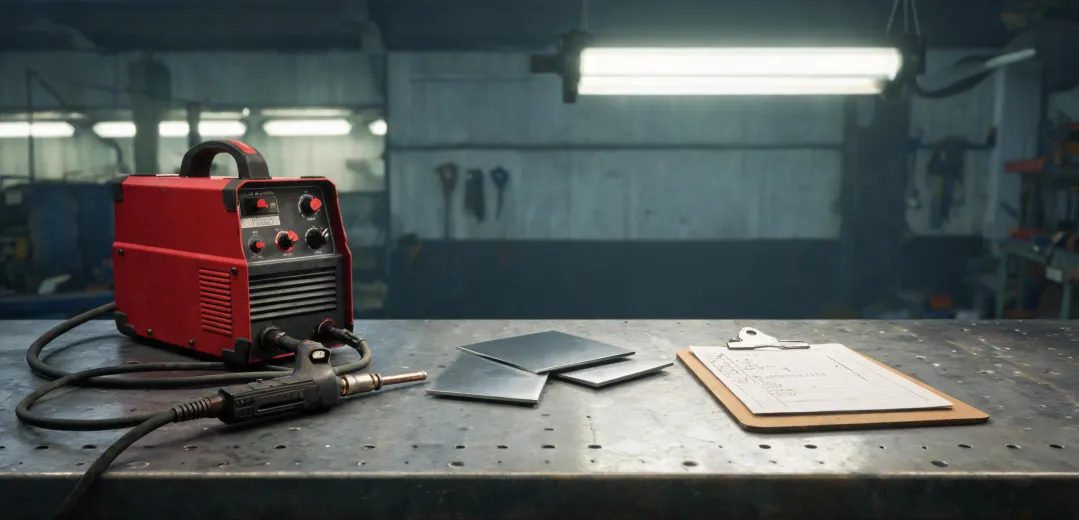
The welding side of the project added a different kind of complexity. Our maintenance manager wanted to replace an old MIG welder. He specifically asked for a Hobart Handler. I found it funny that we'd have Hobart in both the kitchen and the maintenance bay—a slicer and a welder from the same brand. But it simplified our vendor list, which I'm always trying to do.
When I searched for welding machine wholesale options, I found a lot of tempting prices. That's where the trap lives. Some of those sellers aren't authorized Hobart dealers. If you buy from a gray market source, you might not get a factory warranty or parts support. For a machine that needs to work during production, saving 5% isn't worth waiting three weeks for a replacement part.
I called the brand directly, asked for authorized distributors, and paid about 6% more for peace of mind. In 2024, when we had a question about the gas regulator, one phone call got us a clear answer. Good luck getting that from a random listing.
Welder Staffing Services: Where I Actually Got Burned
This is the part that still bugs me.
We needed stainless steel sanitary welding on the kitchen piping. Our maintenance manager was already overloaded, so I hired a welder staffing services company. When I called, they assured me they had "certified TIG welders with food-grade experience." I didn't ask for proof.
I know why: time pressure. We had two days to book labor before the install window closed. In hindsight, I should have pushed back and requested certifications before signing. But the deadline was tight, so I went with the vendor's word.
The welder showed up on time and started work. I didn't think about it again until day three, when my maintenance manager called me over. The welds looked wrong. Discolored. Porous. He checked the guy's certifications—he had general welding experience, but not the specific sanitary welding qualification the project required.
We had to cut out almost all of his work and bring in another crew to redo it. The $6,500 labor contract ended up costing about $9,200, and we lost three days. The vendor wasn't trying to deceive me, I think. They just didn't ask the same questions I should have asked: What exact certification? What material grade? What test results can you show?
Both sides said "certified welder." We meant different things. That's a communication failure, and it was mine to prevent. (Should mention: we'd built in a two-day buffer before the plumbing inspector came. The rework ate it.)
The Robot 3D Laser Welding Equipment Decision
We're now looking at robot 3D laser welding equipment for the next phase. It's tempting to jump on a flashy quote from the same wholesale directories that almost cost me a slicer. But I've learned to slow down.
Here's the checklist I'm using:
- What throughput do we actually need? Not what the sales rep claims, but what our volume data says.
- What training and maintenance support comes with the machine?
- Can we see a production weld on our material, not a polished demo?
- What's the total cost per weld, including consumables, downtime, and operator training?
As of January 2025, we haven't signed anything yet. That's deliberate. I'd rather spend two months verifying than two years fixing an expensive mistake.
Prevention Over Rework
The phrase I keep coming back to is simple: prevention over rework. Five minutes of verification beats five days of correction. That's been true for a $1,100 mixer, a $9,200 welding crew, and a six-figure robot laser system.
Now I have a few habits that used to feel paranoid:
- Read the spec sheet against the actual use case. "Commercial grade" doesn't mean anything without numbers.
- Buy through authorized channels for equipment I can't afford to have down.
- Ask for written certifications from staffing services, not verbal assurances.
- Compare total cost, including downtime and rework, not just the invoice price.
These don't make me the most popular person in the vendor room. They make me the person who keeps projects on schedule and under budget. In 2025, that's worth more than any "wholesale" price.
If you're buying a Hobart commercial meat slicer, a Hobart Handler, or any equipment that keeps your operation running, ask the boring questions first. It's cheaper than the alternative.