Two ways to buy commercial equipment
I'm going to compare two buying paths: buying a known-name commercial machine (using Hobart as the main example) and buying a budget or used alternative. I'll use the same questions I ask in my procurement process: total cost of ownership, daily performance, and support after the sale.
This isn't an academic argument. I'm a procurement manager at a 60-person commercial equipment and repair company. I've managed roughly $190,000 in annual purchases for six years, negotiated with more vendors than I can count, and logged every invoice in a cost tracking system. I've also placed the kind of small orders that some suppliers don't seem to take seriously. That experience shapes the way I compare equipment.
The quick version: if you're pricing a Hobart automatic meat slicer, a Hobart Handler 190 MIG welder, or even a specialized ERW welding machine, the real question isn't "which one is better?" It's "which buying path will cause less pain over the next five years?"
Dimension 1: The sticker price is only the first number
In 2024, a supplier quoted me $2,100 for a budget automatic slicer and $6,800 for a Hobart automatic meat slicer. The surface difference was $4,700—or rather, about $1,900 once I plugged in five years of repairs and lost time. The budget machine needed a blade at month nine ($270), a carriage adjustment at month fourteen ($180), and a motor control repair at month twenty-one ($670). That's $1,120 in reactive service calls, plus two days of deli counter running short. The Hobart needed one routine preventive maintenance visit at $285. Not zero failures; just fewer surprises.
To be fair, the budget machine may have been an outlier. And if you only run a slicer for a few hours a week, you may never see those costs. That's why I always build a TCO spreadsheet before buying. Based on online distributor listings I checked in January 2025, new Hobart automatic meat slicers commonly range from about $5,000 to $9,500 depending on capacity and voltage. The exact number matters less than the math you do before you sign.
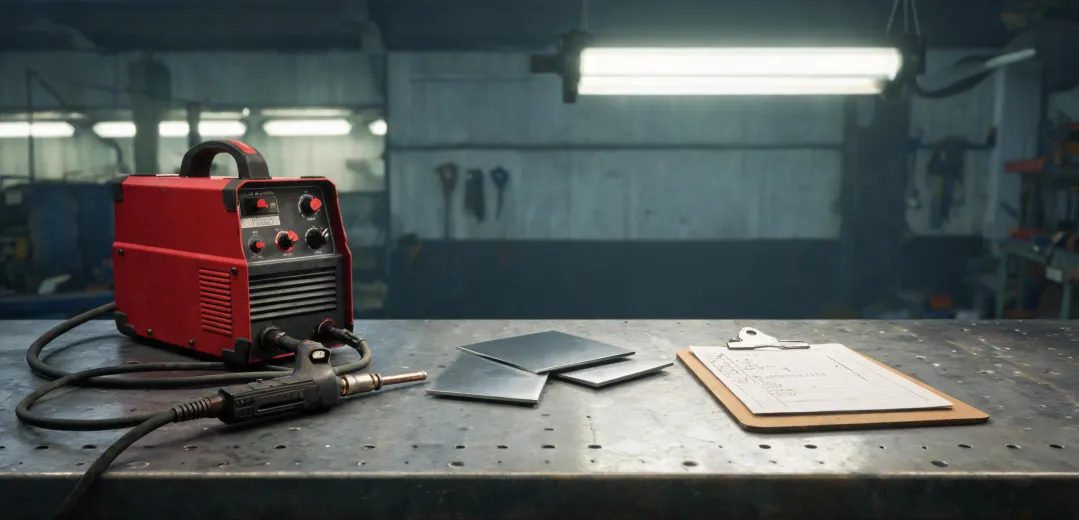
The same logic applies to welders. A Hobart Handler 190 MIG welder package is often listed around $1,100 to $1,300 in online welding supply listings, based on January 2025 checks. A budget 130-amp MIG unit might cost half that. But if you're doing MIG welder work every day, a machine with a higher duty cycle and available parts is likely to be cheaper in year two.
This dimension has an unexpected conclusion: the name-brand path does not always win. If the machine runs less than five hours per week and you can tolerate downtime, the budget option can be the rational purchase. I've recommended it. For a production-critical ERW welding machine, on the other hand, the scale is bigger and the same math gets more serious: one week of line downtime can exceed the purchase price gap.
Dimension 2: "Automatic" doesn't mean the same thing across machines
From the outside, a slicer is just a spinning blade and a welder is just a wire feeder with a trigger. The reality is in the details of how the machine holds up during repetitive work.
We tested slicers with cheese, deli meats, and vegetables. The Hobart automatic meat slicer held its thickness setting through a 45-pound block of cheese. The budget machine wobbled slightly near the end of the carriage stroke, and the fence flexed when I pushed a heavy product. In a low-volume cafe, that wobble may not matter. In a catering kitchen, it means uneven portions and slower prep.
Welding has a similar pattern. Most MIG welder work in our shop is light fabrication: brackets, trailer repairs, thin steel. The Hobart Handler 190 MIG welder ran that work smoothly with .030 wire and handled 3/8-inch steel without complaints. A smaller budget unit might also do it—for about five minutes. Then it drops into thermal protection.
Here's something vendors won't tell you: "commercial grade" is not a regulated term. A machine can be called industrial on the box and still have a 20% duty cycle. That's why I check duty-cycle percentage before I check the warranty.
For specialized equipment, the same logic applies even when the names aren't as familiar. An ERW welding machine is a production asset, not a toy. I'd want a load-test report, spare parts list, and a written service plan before buying anything. An automatic awning welding machine is a niche tool for aluminum frames; there, the ease of adjusting clamps and switching frame sizes matters more than the badge on the side. Brand helps only if it also brings documentation and parts.
Dimension 3: Parts, support, and being treated like a customer
The biggest difference between the two buying paths shows up after the sale. When a generic machine breaks, I sometimes wait weeks for parts and get a PDF manual with no torque specs. When a Hobart machine breaks, I can usually find a service manual and a distributor who knows the part number. According to Hobart's published product literature, commercial slicers are designed with scheduled maintenance in mind—not as an afterthought.
Honestly, I'm not sure why some suppliers treat small customers as if they don't matter. My best guess is that they're optimizing for big orders and don't see the long-term potential. In my experience, that's a mistake. The vendors who took my $200 orders seriously are the ones I still call for $20,000 orders. Small doesn't mean unimportant; it means the buyer still has room to grow.
If you run a small shop, the name-brand price can be intimidating. I get it. But small customers need honest budgeting more than anyone. A machine that fails on a Friday night costs more than the repair invoice because you don't have a backup line. That's why support matters more than the hero photo on a brochure.
Which should you choose?
Here's my honest rule:
- Buy the name-brand path when the machine runs daily, downtime stops revenue, or you don't have in-house maintenance. A Hobart automatic meat slicer and a Hobart Handler 190 MIG welder are easy choices in that situation.
- Buy the budget option when usage is light, you can handle repairs yourself, and a breakdown will not sink your week. A small automatic awning welding machine for occasional aluminum repairs might fall into this group.
- Buy based on service capability if you're buying an ERW welding machine or any production-critical line. The logo matters less when you have a support contract and a spare parts plan.
I went back and forth for two weeks between a new Hobart slicer and a used auction one at half the price. The used one made accounting sense until I thought about service history and warranty. I chose the new one because a Friday-night breakdown is not an inconvenience if you're a caterer; it's a customer relationship.
To me, the best purchase is the one you can defend with numbers. I keep a TCO spreadsheet for every important machine, and it changes my opinion more often than I'd like to admit. Whether you're pricing a Hobart automatic meat slicer, a Hobart Handler 190 MIG welder, or a specialized ERW welding machine, write down the hours, the repair risk, the support cost, and the cost of downtime. The right answer might surprise you—and if you ask me, that's exactly what an honest equipment comparison should do.