I saw the red 'REJECTED' stamp before I even opened the email attachment. The photo showed a row of bead welds on a stainless steel bracket—each one looked like a giant spider had laid eggs. Porosity everywhere. The date was June 12, 2024, and it was a $1,800 reminder that a famous brand doesn't make up for buying the wrong type of machine.
Here's the thing: I'm a quality/compliance manager at a small food processing company. Every year I review 200+ specs and purchase orders. In Q1 2024, the health inspection flagged our old dishmachine for not sustaining sanitizing temperatures. The maintenance crew was also tired of waiting two weeks for $300 stainless brackets from a local shop. So I got a budget to do two things: replace the dishwasher and set up a small welding station.
The commercial Hobart dishwasher was the easy part. We bought a hot-water sanitizing model, and I confirmed the spec before the plumber touched anything. NSF/ANSI Standard 3 requires a final rinse at 180°F for hot-water sanitizing machines; our incoming water was barely 120°F. We added a booster heater, passed the next audit, and that was it. No drama. Which, in hindsight, should have been a warning: the easy install was the exception, not the pattern.
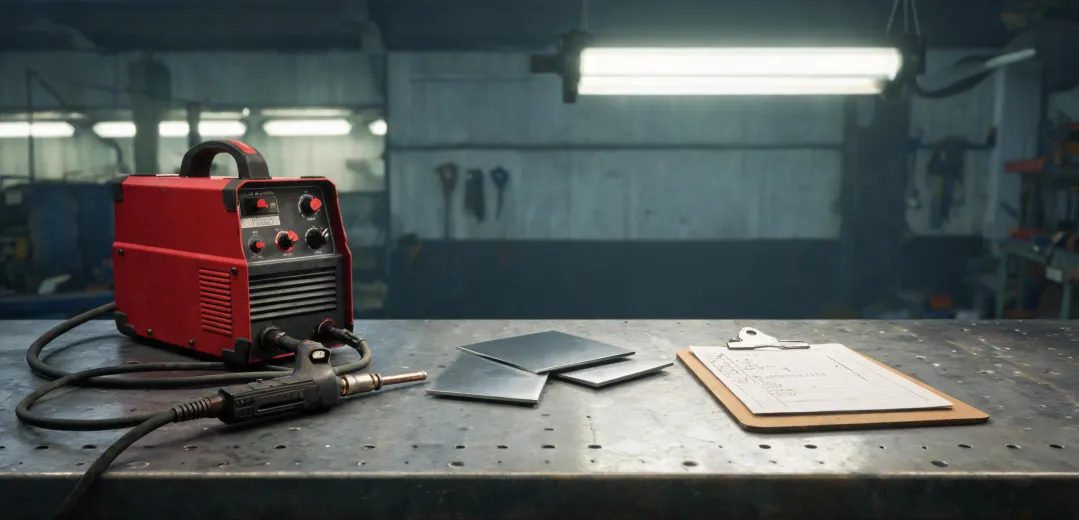
Then came the welder. I ordered a Hobart Handler 140—a 140amp MIG welder—along with a Hobart auto-darkening welding helmet. I figured 140 amps would be plenty for 16-gauge stainless and 1/4-inch plate. Look, I'm not a welder. I can read a data sheet, but I never understood the difference between MIG and TIG until that afternoon.
The maintenance lead fired it up on some stainless scrap. The wire burned through the metal like a hot knife through butter. 'We need TIG for this,' he said. 'MIG is too hot and too fast for thin stainless.' I said, 'But it's a Hobart—it's a good brand.' He stared at me like I'd made the sign of the cross with a blow torch.
He was right. MIG—wire-fed welding—lays down metal fast, which makes it great for thicker steel. But it's brutal on 16-gauge stainless. TIG uses a tungsten electrode and a separate filler rod, so you control the heat independently. That control is what gives you clean, precise welds on thin material and aluminum. The plain-language difference between MIG and TIG: MIG is like a firehose, TIG is like an artist's brush. One is about speed, the other about control. Neither is 'better' universally.
So we had a brand-new $1,400 welder that was the right name, wrong process. We spent another $2,200 on a TIG unit. The Handler sat in the corner until we had some 1/4-inch carbon steel repairs—where it's genuinely useful. (Note to self: always match amperage range to material thickness before signing a PO.)
The next mistake was dumber. The maintenance lead was prepping a welded stand and asked, 'Did you buy a beveling machine?' I didn't even know that was a thing. A welding beveling machine cuts a V-shaped edge on thick plate so the weld can penetrate the full cross-section. We skipped it, welded the plate square, and the stand cracked during a drop test. That cost us a redo and a missed deadline—a $2,300 lesson in edge prep. Why didn't I ask? Because I was so focused on the big metal boxes and the branded helmet that I forgot the auxiliary tools. In quality, the unglamorous spec is usually the one that saves you.
Another thing I'd do differently: I'd run a blind side-by-side test before buying. I did one for the dishwasher—same plates, same soil load, two machines. The Hobart was visibly cleaner after one cycle. I didn't do that for welding. I just trusted a product category I clearly didn't understand. That's on me.
For anyone in a similar position: if you're choosing between a MIG welder and a TIG welder, write down the materials you actually work with, then the thickness, then the required finish. If your list is mostly 1/8-inch to 3/8-inch steel, a MIG is a pragmatic workhorse. If you see thin stainless, aluminum, or any kind of decorative or food-contact welding, plan for TIG or at least accept the extra cost and learning curve. And in either case, a beveling machine is not an optional accessory once you get above 1/4-inch plate.
By late July 2024, we had it sorted. The commercial Hobart dishwasher passed the health inspection with zero findings. The shop now has a MIG for heavier carbon steel, a TIG for stainless, and a cheap but effective beveling machine on the bench. The cracked stand got re-welded and hasn't failed. I also added a checklist for future equipment buys: define material, thickness, process, consumables, and edge prep before looking at brands.
If I'm being honest, the 140amp MIG welder is a fine entry-level machine. But here's the honest limit: it won't handle thick aluminum, and it's not the right tool for thin stainless. There's no universal welder, and no amount of brand trust replaces matching the tool to the job.
This was accurate as of early 2025, and prices/models do change. Check the current Hobart specs, ask an actual welder, and—for the love of your budget—buy the beveling machine before you need it.