-
Start With Your Work, Not the Model Number
-
What You Are Actually Comparing
-
Scenario A: Production Steel and Structural Fabrication
-
Scenario B: TIG Precision, Stainless and Aluminum
-
Scenario C: Mixed Maintenance, New Hires, or an Unclear Work Mix
-
Which Scenario Are You In?
-
Before You Buy: Ask What Is Not Included
-
The Bottom Line
Start With Your Work, Not the Model Number
The first call I get from a shop usually starts with a single question: which Hobart is better, the 220 or the 225? That is the wrong question. I coordinate equipment replacements for fabrication shops, and I have helped with more than 40 rush machine purchases over the last six years. In March 2024, a customer was 36 hours away from a deadline with a dead welder and a $50,000 penalty clause hanging over the job. I did not have time for brand loyalty. I had time for a decision tree.
There is no universal answer. A Hobart 220 welder and a 225 welding machine are different tools that happen to share a brand. Both can be described as heavy duty, but only if they are matched to the right process. Before you even look at a heavy duty welding machine for sale, you need to sort yourself into one of three scenarios.
What You Are Actually Comparing
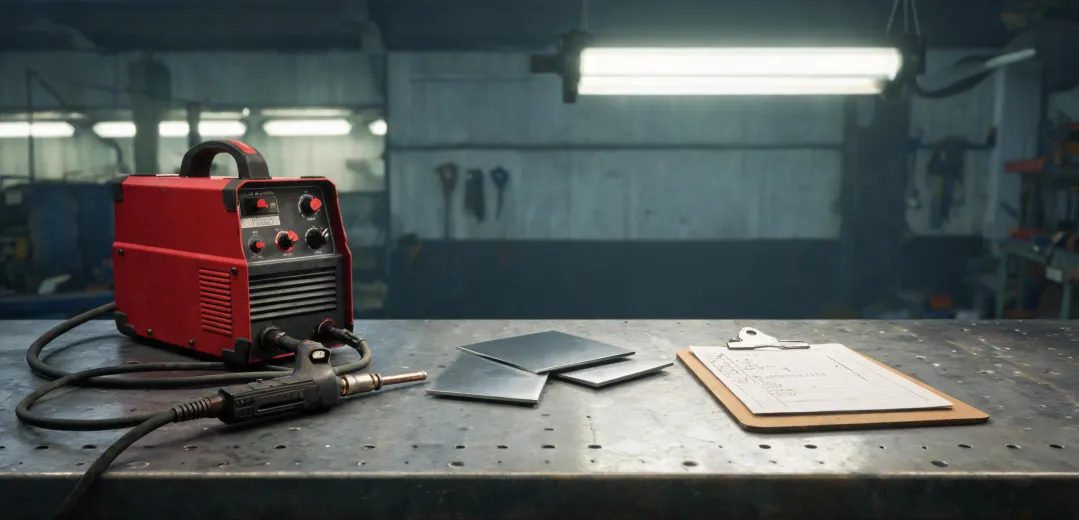
A Hobart 220 welder is a MIG and flux-cored machine. It uses a continuously fed wire, runs on 220-230V input, and is built for production steel work. If you are welding anything from 1/8-inch steel brackets to trailer frames, this is the process that gets production out the door.
A 225 welding machine is an AC/DC TIG and stick machine. It gives you precise control over heat and filler, which makes it the right choice for stainless steel, aluminum, and pipe work. The 225 can also handle stick welding in dirty or outdoor conditions. It is not a MIG machine.
The number in the model name sounds like a ranking. In practice, it is not. The 225 is not a better version of the 220. It is a different class of welding process. When I compared a 220 MIG and a 225 TIG/stick side by side in the same shop, I finally understood why process matters more than model number. The MIG machine ran beads on carbon steel twice as fast. The TIG machine produced clean, code-ready welds on stainless that the MIG could never match.
Don't hold me to this: Hobart refreshes model names and options over time. The current spec sheet is the final word.
Scenario A: Production Steel and Structural Fabrication
If your work is mostly carbon steel, structural repairs, gates, trailers, racks, or anything where speed and feedability matter, choose the Hobart 220 welder. MIG wire is forgiving. A new operator can learn to make acceptable welds in days, not months. Stick and TIG require more hand-eye control. For a shop running multiple jobs a day, that difference changes the math.
In one rush case, a fence shop called at 4:30 PM with a broken MIG gun on the only machine in the building. The replacement was a Hobart 220 MIG. It arrived by 9:30 the next morning, the electrician already had the circuit ready, and the shop missed one shift instead of a week. If I had replaced that machine with a 225 TIG/stick unit because it had a higher number, the order would have been late and the penalty would have crushed the profit.
Looking back, I should have pushed the shop to order a spare liner and contact tips at the same time. I was focused on the price of the machine alone. An $18 liner would have saved another panic call later. That lesson stayed with me.
Even after I approved that 220 MIG, I kept second-guessing. What if the shop landed a big aluminum TIG job the next week? I did not relax until the machine was installed and the first production part passed. That doubt is normal. The way to reduce it is to ask better questions before you order.
Scenario B: TIG Precision, Stainless and Aluminum
If your revenue depends on stainless handrails, aluminum brackets, thin-wall tube, sanitary pipe, or repair work where appearance matters, choose the 225 welding machine. TIG gives you separate control of heat and filler, so you can weld thin metal without burning through. AC TIG handles the oxide layer on aluminum. DC TIG produces clean stainless welds without spatter.
Stick mode gives the same machine a second life for heavy, dirty, or outdoor work. In a well-equipped shop, a 225 TIG/stick unit is not competing with a 220 MIG. It is the specialty tool that wins the jobs the MIG machine cannot quote. That is why AWS D1.1 and many pipe procedures require documented welding procedures and qualified welders. The machine has to hold stable parameters over multiple passes, and the 225 class is built for that kind of control.
Granted, TIG is slower than MIG. That is not a reason to avoid it. That is a reason to use it only when the job calls for it. If you are hiring for welder journeyman jobs and your weld test includes 2-inch pipe or aluminum coupons, the 225 is the machine you want at the test bench.
Scenario C: Mixed Maintenance, New Hires, or an Unclear Work Mix
This is the scenario where conventional wisdom hurts people. Most people see the 225 and think more processes means more versatility. In my experience, a mixed maintenance shop or a shop about to hire several new welders will get more use from a Hobart 220 MIG than from a 225 TIG/stick machine.
Why? Because most maintenance repairs are steel, and most new welders learn MIG faster. The 225 is a great machine, but if the operator was not trained on TIG, the machine cannot fix bad technique. It will just make bad TIG welds more slowly.
I have tested six different machines in real shop environments over the last few years. The machine that got used the most was not the most powerful one. It was the one the operators set up quickly and trusted to weld steel without a fight. When I compared a 225 and a 220 in the same quarter, the 220 paid for itself faster in a shop with mixed work because it was used every day.
If you cannot honestly say whether your work is 80 percent MIG steel or 80 percent TIG precision, do not buy a forever machine yet. Buy the easy machine first. Rent or outsource the TIG work until you have data. That approach feels counterintuitive, but it reduces risk and preserves cash.
Which Scenario Are You In?
Here is the process I use when someone tells me they just need a welder. Get a sheet of paper and list the last 20 jobs your shop actually completed, not the jobs you hope to get someday. For each job, write the process and the base material.
- If 15 or more of those jobs are carbon steel MIG work, you belong in Scenario A. Buy the Hobart 220 welder.
- If 10 or more involve stainless, aluminum, pipe, or appearance-critical TIG, you belong in Scenario B. Buy the 225 welding machine.
- If the list is mixed, or you are hiring welder journeyman jobs for the first time and do not know what your team will run most, start with Scenario C.
That list is the decision anchor. It is more reliable than a forum thread because it is based on your actual revenue, not someone else's opinion.
Before You Buy: Ask What Is Not Included
Once you know which scenario you are in, compare quotes the right way. I learned to ask what is not included before I ask what the price is. A quote for the machine alone is not a complete quote.
For a Hobart 220 welder, you may need a MIG gun, liner, contact tips, a gas cylinder, a regulator, and a dedicated 220V circuit. For a 225 welding machine, you may need a TIG torch kit, argon gas, filler rods, and consumables. If the vendor does not list these costs upfront, they are not giving you a discount. They are giving you a surprise.
The vendor who lists all required accessories upfront, even when the total looks higher, usually costs less in the end. A transparent quote is a sign that the vendor expects a long relationship. A quote that hides shipping, liftgate fees, and the missing foot pedal is a red flag.
Also check the Hobart spec sheet for input power and duty cycle. The brochure price is irrelevant if the machine needs an electrician to install a new 50-amp circuit. The true cost is machine plus accessories, installation, and the time it takes to get running.
The Bottom Line
If your search history already includes hobart welders welders or heavy duty welding machine for sale, you are on the right track. Just remember that the model number is not the strategy. The process is.
The best Hobart welder for your shop is the one that matches your actual work, your actual materials, and the actual skill level of your team. That is a decision tree, not a popularity contest. If all else fails, call a local welding supplier, describe your last ten welds, and listen to what they ask you. The right supplier will ask about process, not just amperage.