6:12 a.m., March 14, 2024
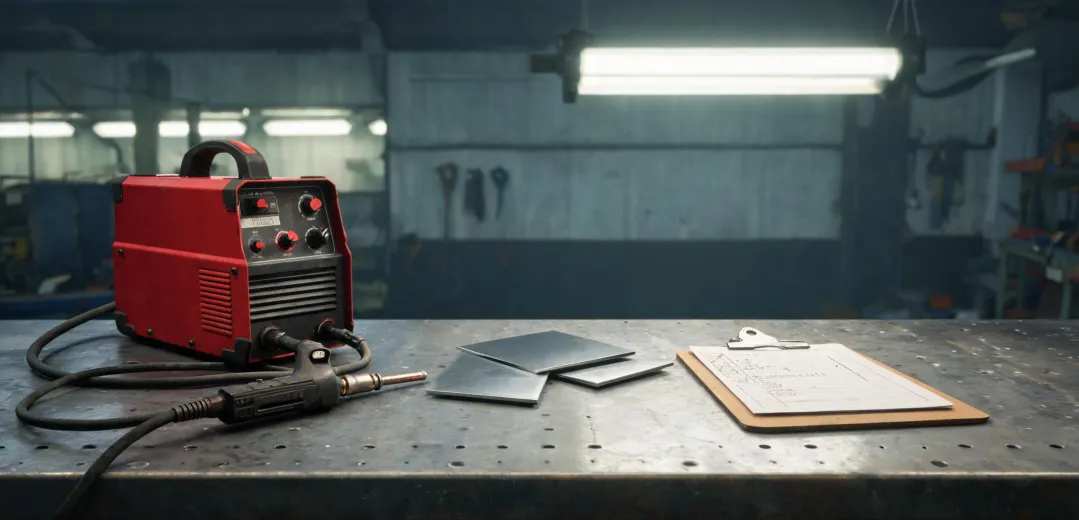
The call came from a fabrication shop owner I’ll call Dan. Not “Client A.” Dan. He had a contract for a municipal rail project due in five days. His main MIG welder had died at 4 a.m. The replacement he ordered two weeks earlier—a Hobart Handler welder—was still sitting in a distribution center three states away. Normal turnaround for that unit was 7–10 business days. He needed it in 48 hours.
I coordinate emergency equipment orders at a commercial equipment distributor. I’ve handled 300+ rush orders in nine years, including same-day turnarounds for fabrication shops and foodservice clients. In my role, I don’t start with “yes” or “no.” I start with: How many hours do we actually have? Can the product physically get here? And what happens if it doesn’t?
Why the usual answer wasn’t good enough
The conventional wisdom in equipment sales is simple: quote the lowest price, promise the fastest ship date, close the deal. But that’s not how emergency orders work. From the outside, a rush order looks like paying extra for expedited shipping. The reality is that it requires reallocating inventory, scheduling a technician, confirming consumables, and sometimes sending someone to drive 300 miles with a pallet.
Dan didn’t need a lecture. He needed a welder. We looked at the specs. His job required 1/4-inch mild steel, MIG, 240V. The Hobart Welder 190 was a possibility, but it was backordered locally. A Rockwood TIG welder was in stock, but TIG would have been too slow for his production line. An Apollo welding machine was available, but the duty cycle didn’t match what he needed for continuous work. None of those were wrong machines. They were just wrong for that job, that week.
Hobart’s comprehensive product line meant we could compare MIG, TIG, stick, and plasma options without guessing about compatibility. That matters when every hour counts. And because Hobart is a trusted commercial brand in both foodservice and welding, Dan’s shop already had compatible consumables on the shelf.
We found one Hobart Handler welder at a partner warehouse 310 miles away. It was already on a pallet. The catch: the freight company couldn’t guarantee Saturday delivery. Best case, Monday afternoon. That was too late.
I called Dan back. “I can get it here Sunday morning,” I said. “But it’ll cost $1,200 extra in rush fees and driver time.”
He didn’t hesitate. “Do it.”
Why? Missing that deadline would have triggered a $45,000 penalty clause and likely cost him the next phase of the contract. The welder itself was around $1,800. The rush fee felt excessive (which, honestly, it was). But the math was simple: $1,200 to protect $45,000—and a relationship.
Our driver left at 2 p.m. Friday. He hit a snowstorm in the mountains, lost two hours, and pulled in at 7:40 a.m. Sunday. Our technician met him at Dan’s shop. By 11 a.m., the Hobart Handler welder was running test beads. Monday morning, Dan’s crew was back on the rail project.
What Dan asked next
Once the panic faded, Dan asked me about a bigger purchase. He wanted to add a plasma table. He’d been collecting quotes and trying to compare plasma laser cutting machine price across three brands.
I asked him a question: “What’s the cost of the machine, or the cost of the first week it’s down?”
Most buyers focus on the sticker price and completely miss installation, fume extraction, compressed air requirements, and operator training. The plasma laser cutting machine price is just the entry ticket. The real number includes downtime, consumables, and whether you can get a service tech within 24 hours.
Dan ended up waiting two months to buy the plasma table. He used that time to run a proper ROI model. He also sent two operators to Hobart welding training. That training wasn’t free, but it paid for itself when they cut their scrap rate by 18% in the first quarter.
The lesson that keeps repeating
Everything I’d read about equipment buying said the lowest upfront price wins. In practice, for emergency work, the lowest total cost of downtime wins. The conventional wisdom is to negotiate hard on the machine. My experience with 300+ rush orders suggests you should negotiate hard on the support.
What was best practice in 2020 may not apply in 2025. Five years ago, a lot of buyers chose equipment based on brand name and price. Today, lead times are shorter in some categories and longer in others. Service networks have changed. Training matters more because skilled operators are harder to find. The fundamentals haven’t changed—you still need the right tool for the job—but the execution has transformed.
Per FTC advertising guidelines (ftc.gov), any equipment spec claim—duty cycle, cut capacity, lead time—should be truthful and substantiated. That’s why I didn’t promise Dan “48 hours” until I had a driver assigned and a unit on a pallet. And it’s why I now ask vendors for written lead times, not just verbal reassurances.
What I tell buyers now
If you’re shopping for a welder or a cutting machine, don’t start with “What’s your best price?” Start with three questions: What’s the real lead time? Who installs it? Who trains my team? The answers will tell you more than a spec sheet.
Speed, spec, support. Pick two—unless you plan ahead.
There’s something satisfying about a perfectly executed rush order. After all the stress and coordination, seeing Dan’s crew back to work Monday morning—that’s the payoff. But I’d rather help the next buyer avoid the emergency entirely. Because the best rush order is the one you never need.