The sticker price on a Hobart commercial dough mixer, a Handler 140 MIG welder, or a cobot welding cell is roughly 60% of what you'll actually pay over five years. The other 40% hides in consumables, service call minimums, training gaps, and downtime. I've watched three different departments learn this the hard way since 2019.
I'm a procurement manager at a 140-person metal fabrication shop in the Midwest. I've managed our combined equipment budget — around $180,000 across six fiscal years — negotiated with 40+ vendors, and logged every invoice in our cost tracking system. When I audited our 2023 spending, the pattern was ugly and consistent: the categories where we overran budget worst were exactly the ones where we'd picked the lowest quote.
What the numbers actually look like
When I built our TCO spreadsheet in 2022 (after getting burned twice on hidden fees), I broke equipment cost into four buckets. Here's what six years of data showed:
- Purchase price: 55-65% of real five-year cost
- Consumables and dies/tooling: 10-20%
- Service, calibration, and on-site visits: 8-15%
- Downtime and rework: 5-20% — this one varies wildly based on how prepared you are
That last bucket is where prevention pays off. 5 minutes of verification beats 5 days of correction. I know that sounds like a poster in the break room, but I've got the invoices to back it up.
Three specific cases from our own log
The Hobart commercial dough mixer
We bought a used Hobart mixer for a bake-off facility we were setting up in 2022. Vendor quoted us $7,400 delivered. Almost signed. Then I ran the TCO model: the unit needed a replacement bowl guard ($340), a new planetary seal kit ($180), and their service contract started at $95/month with a 4-hour call minimum. Over 5 years, that mixer landed at about $14,200 — nearly double the quote. We still bought it, but we went in with open eyes and negotiated the first year of service into the deal.
The frustrating part: the vendor's quote was technically accurate. Everything was disclosed. It just wasn't totaled anywhere.
The Handler 140 MIG welder
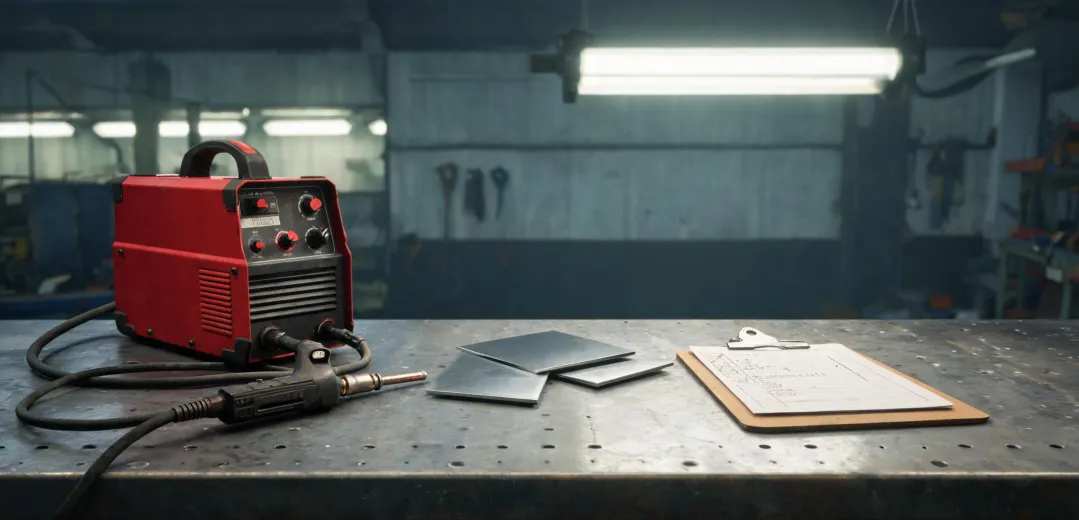
Different story. We bought three Hobart Handler 140 units for our training shop in Q2 2024. Each one ran $740 shipped. Here's the thing though — new welders mean new consumables. Contact tips, nozzles, liner replacements, shielding gas refills. For three units in active training use, we're burning about $140/month on consumables alone. The machines themselves were fine. The "cheap" welding tech we looked at first would've saved us maybe $300 per unit upfront and cost us roughly $2,100 more per year in consumable incompatibility and duty-cycle failures.
I still kick myself for not building the consumable cost model before we ran the initial quote comparison. Would've saved two weeks of back-and-forth.
The cobot welding cell
This is the one where I'd tell anyone: don't buy a tech welding machine or cobot welding machine without factoring in integration and operator training as line items. Our first cobot quote looked reasonable at $34,000. Add programming setup, end-effector customization, safety fencing retrofit, and the 40 hours of operator training nobody mentioned — that cell hit $51,000 before it ran a single production weld. The math still worked out at roughly 14 months to break-even versus our manual welding hours, but only because we modeled it correctly upfront.
What I can't speak to
I can only speak to domestic US procurement for industrial equipment. If you're evaluating PPR welding machine price in India, for example, the calculus is completely different — import duties, local service networks, and currency exposure all change the picture in ways I have no direct experience with. Don't overlay my numbers onto that market.
This was accurate as of January 2025. Equipment pricing moves fast — especially in the welding automation space — so verify current quotes and service contract terms before you commit budget.
The one policy that's saved us the most money
Our procurement policy now requires three things before any equipment purchase over $2,000:
- A five-year TCO model with named line items (not estimates)
- A 12-point pre-purchase checklist covering consumables, service terms, training, and integration
- Verification that at least two people on our team can actually operate and maintain the unit
That checklist has saved us an estimated $8,000 in potential rework since I built it in 2023. Not because the equipment was bad — because we stopped buying things we weren't ready to support.
One boundary worth flagging: this approach assumes you have predictable ordering patterns and at least one person who can own the equipment lifecycle. If you're a seasonal operation with demand spikes, or you're running lean with no dedicated maintenance capacity, the calculus shifts. The TCO model still helps, but the downtime bucket gets heavier — and that's usually the one that decides whether a purchase was actually a good deal.